Friday, 19 January 2018

Critical Perspectives: Disertation Proposal

Critical Perspectives: Disertation Proposal

Today we took our first steps in to preparing for our disertation. 

Formalism- The elements that make up and structure the films "form".

Cinimatography, editing, sound, narration etc. all have an effect on the audience. They help make up formalism and they all have sub catagories that aslo have an effect on the audience e.g. characterisation, frame rate etc.

Realism an social realism is another useful topic to analyse. 

Auteur theory can be a useful case study and applied to a variety of films and film directors (French New Wave can be useful to look at).

Alternativeley a different approach to film cou;ld be to use genre theory.

Phsychoanalysis- The male gaze, Laura Mulvey, charol Clover etc.
2nd Wave femanism, post femanism and consumer choice of branding.

Hypodermic needle theory, opinion leaders, audience reception theory etc.

There's loads of catagories to be explored, e.g. fashion and costume in TV; representation of gender etc; product placement in TV; political and economic representation etc.

The Shape Of Your Disertation
 
Your disertation should flow as follows.

An introduction- sets up and prepares the reader. 

Chapter 1- The Beguining 

Chapter 2- The Middle

Chapter 3- The End

Conclusion

You need a clear, focussed and research informed question, or statement of intent.

Thursday, 18 January 2018

As Live Production: Pitch Development 18/1/18

As Live Production: Pitch Development 18/1/18

Today we set about actioning some of the points I laid out on my to do list earlier this week.

The first thing to do was to finalize some important decisions such as our target audience and what we could use our VT's for. 
My inspiration for Teen Talk TV came from a gap i noticed in the audience of two popular shows that tackle politics/current events. 

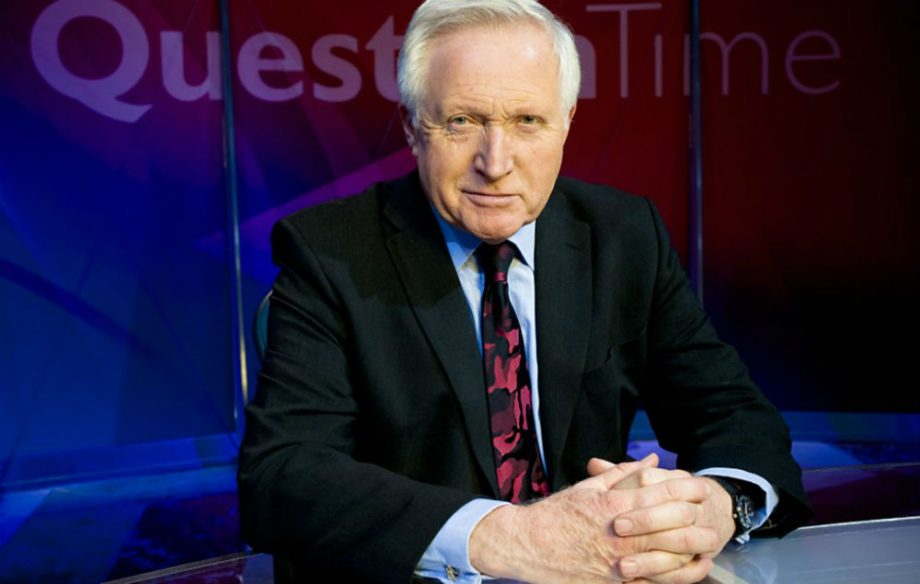
The Huffington Post explains Question Time in the following way:"The show features politicians from at least the three major political parties as well as other public figures who answer pre-selected questions put to them by an audience selected on the basis of its political views and demographic"...... the audience demographic is usually male and female aged 25 and upwards.

Where as Newsround according to the BBC: "Newsround has a target audience of 6 to 12-year-olds and the stories and language used in our bulletins reflects that….We try to pick stories that will appeal to our viewers - and we try to bring a child's view into our reports. Our team is a mix of child experts, journalists and teachers" (BBC, 2011).


So noticing this gap in audience demographics (from about 13 to 26) gives us a USP and a market gap to use on our idea. We hope to employ similar techniques that Newsround does by getting a teen view in to some of today's important stories, but tackling them in more of an adult way like Question Time. 

So with that in mind Danny and I came up with our initial tag line that identified our audience, which is as follows:


Teen Talk TV is a discussion show for the youth market. Our primary target audience are both male and females between the ages of 16-19. Our secondary target audience are male and females between the ages of 20 - 25.

The next thing to focus on was what channel we wanted to broadcast on. Initially we thought it would fit well with channel 5, however since we were aiming at a young target audience some research in to their TV watching habits had to be undergone. 


After reviewing recent statistics from Ofcom we have noted that there has been a significant drop in the number of young people watching TV. So in order to keep up with our target audience we felt it best to move online.

We feel our show would be best suited for a BBC3 audience. Especially since according to Damian Kavanagh (Current BBC Three Controller) "BBC3 Currently aims to target 16-34 year olds".
(Dowell 2017)    

If we were to broadcast online we'd release episodes on a weekly basis (likely on a Thursday)

With a firm audience and channel set we will move on to planning out how our show will work in the studio e.g. space management, timings, VT etc.

Bibliography
BBC, 2011. Frequently Asked Questions. [Online]
Available at: http://www.bbc.co.uk/newsround/13927399
[Accessed 18 January 2017].

Dowell, B., 2017. BBC3 reveals audience targets for first time as it chases new generation of online viewers. [Online]
Available at: http://www.radiotimes.com/news/2017-09-07/bbc3-reveals-audience-targets-for-first-time/
[Accessed 18 January 2018].

Ofcom, 2017. Box Set Britain: UK’s TV and online habits revealed. [Online]
Available at: https://www.ofcom.org.uk/about-ofcom/latest/media/media-releases/2017/box-set-britain-tv-online-habits
[Accessed 17 January 2018].

Post, H., 2016. BBC Question Time. [Online]
Available at: http://www.huffingtonpost.co.uk/news/bbc-question-time/
[Accessed 18 January 2017].

As Live Production: Pitching, Research And Treatment

As Live Production: Pitching, Research And Treatment

What is the purpose of a pitch?
-To allow you the oppertunity to convey your idea to a board, in order to receive feedback and hopefully get your idea commissioned.

What should you do before the pitch?
-Research your idea to ascertain for yourself its: Streangths, weaknesses, oppertunities, threats AKA-SWOOT Analysis.

Your idea must have an objective. 
Before pitching your idea you should summarise your idea in to a single page proposal. 

Important elements for a pitch: Working title and location; Subject and premise of film (your idea in one sentance, then a full synopsis); Target audience and channel; Style and Tone.

Mood boards are often useful, with reference images as to the colours, presenters etc. you want to use. 
Other images/clips and visual aids can be useful. 

Bring your pitch to life! Engage your audience, and guide them through step by step. Use posative body language.

Be prepared to ask questions, it's ok to take your time to think through an answer (maybe have some facts and figures ready). Remain Posative as well.

Take on board feedback and turn critisism to your advantagel. 

Emphasise USP!!!

Tuesday, 16 January 2018

As Live Production: Pitch Idea Development

As Live Production: Pitch Idea Development

As this unit moves forward Danny and I began to refine our ideas. After some consideration we came to a decision about our most effective idea.

We decided that our best idea was "Teen Talk TV", there were several reasons for this including: 

-It has more originality than other ideas.
-It targets a gap in the market and has a good USP.
-It is more realistically achievable with the budget, time, space   and other resources that we have available.
-It fits well with certain channels but also has online potential.

After we had decided on which idea we wanted to take forward I was keen to get started with our research and putting out some "feelers" for casting and content.

In order to target a young audience I researched in to youth groups involved in politics or current affairs. During my research I came across two groups of people. The first group was the UK Youth Parliament. I thought they would make great contributors because of how they defined themselves.

"The UK Youth Parliament provides opportunities for 11-18 year olds to use their elected voice to bring about social change through meaningful representation and campaigning". 
(Parliment, 2017).

I found the details of their press office on their website and sent out an email explaining the aims of our project and expressing our interest in speaking to some of their representatives.


I continued to research in to potential contributors and was reminded that each county in England has its own Youth Council, I looked in to the Maidstone youth council and got their contact details as they were the most local, however I also remembered that I had a few contacts in the Gravesham Youth Council.

Image result for gravesham youth councilMy contacts were also the perfect age for our target audience so I got in contact with them via social media and they expressed interest in the project (which hopefully gives as a small lead over some of the other groups).


Bibliography

Parliment, Y., 2017. UK Youth Parliment. [Online]
Available at: http://www.ukyouthparliament.org.uk/
[Accessed 16 January 2017].


As Live Production: Lecture 16/1/18

As Live Production: Lecture 16/1/18

Why Choose As Live?

Advantages: Less is left to chance (you have more controll); The oppertunity to re-record certain elements of the show if necisarry; No technical problems can occur with transmition links since they wont be used;

Disadvantages: Potential to feel "manufactured"; the tension and atmosphere of a real live production is hard to re-create; post production can cause the programe to loose its "live feeling"; over shooting is an easy temptation; audience can feel cheated when they find out its not really live.
Image result for on air sign
As Live Formats: Pannel shows; Quiz shows; chat shows; music; other entertainment.

Common themes in As Live: Audience; Usually recorded in a studio; Often involve on screen guests/talent e.g. main presenter/anchour; use of VT's. 

Audiences - Why do we have an audience? What do they add to the viewing experience? Do we need them?

The Audience can take a number of roles:
Passive; Participatory/active; Appriciative; Supportive.
The role they play depends on the type of format you are producing.

Theoretically, anything can be presented in an as-live format. It is only limited by considerations such as: Time, location, budget, legistics. 

Suggested Blog Research: As Live Formats, watch them and consider
Why is it "As Live"
Impact
Audience
....

Points For Analysis: Content, Style, Location, Presentation, Contributors, Format.

Why Choose Live?
Technological advances in satalite technology have led to the advent of outside broadcasts (OB's)
These broadcasts include: Sporting events (e.g. olympics); National/international celebrations (e.g. royal wedding); Ceromonial ocasions (e.g. coronations).

Image result for Live sign

Case Study - Live Aid
3rd July 1985 Bib Geldof organised Live Aid.
16 hour live broadcast.
It was plauged with technical problems, but it was ground breaking for the time! 

Other Live Content Includes:
One off specials; Reality TV; News Broadcasts etc. 

Live Broadcasts often make the news more than other programing. 

Live Broadcasts often get bigger audiences than other broadcasts. 

The End Of Live TV??
Current predictions show that 50% of all TV media will be cinsumed online by 2020.
Live TV may become less popular but Live streaming is predicted to continue to take off. 

With Live Production you need to think about; scripting, timing, casting, safetey, cabling, running order, legal stuff etc.
OB's have even more to consider as you can be transitioning between different locations and need to rely on satalite links.

Often VT's are kept in reserve in case they go off air, so that they have something to fill the gap if nothing else. 

Live shows are particularly vunerable to legal problems. 
The producer in the gallery has to work hard to avoid or manage these issues and communicate to a presenter or team member to resolve any issues. 

You can get in trouble for lying to audiences or showing certain contnent before watershed. 

Possible Blog Research- In an "on demand" world does Live content still have a place?
 

Monday, 15 January 2018

TO DO LIST: 15/1/18

TO DO LIST: 15/1/18

Bellow is a list of things I hope to achieve this week that will help with the development of our ideas, as well as act on the feedback we have received. 

  • Put together a running order for our shows. 
  • Put together a proper floor plan for our shows.
  • Contact youth representatives.
  • Finalise certain decisions e.g. target audience, VT etc. 
  • Plan out answers to questions/issues ready for pitching and further feedback sessions. 

Friday, 12 January 2018

As Live Production: Idea Development 12/1/18

As Live Production: Idea Development 12/1/18

Continuing with the development of our ideas Danny and I sat down to work out some more details and act on some of our recent feedback. We also met with Jo to Discuss what we had been working working on and get some valuable feedback from her about how we could develop it further. 

The first thing we decided upon was a name for our Chat show. Since it is designed to get young people more engaged in politics we went with the title of "Teen Talk TV". After some discussion we decided that it could work well on both channel 4 and channel 5, with a weekday evening time slot. 

We then worked out the 4 sections that could fill the 30 min time slot of our show which are pictured in the adjacent image. We also planned out the VT that we would have. 
We had a discussion about how audience interaction would be most effectively used and ultimately we decided that in order to keep the show interesting and fresh we should incorporate audience opinions in to each of the 4 sections. 

We also though a little more about our "Couple Clash" idea.
We planned out a rough set design for the show that could help us figure out we could place cameras and audience. Also acting upon Helen's feedback we thought more carefully about our VT's and what they could be used for. 
Ideally we'd like to get each couple's family involved  so that they could reveal a fun fact about our couples that wouldn't otherwise be known and could help create more discussion points. 

Feedback From Jo
After our initializes development Danny and I met with Jo to discuss how ideas were developing and get her opinions on the topic. 

Couple Clash Feedback: Jo liked the idea of this show but had a few points to raise.

  • She said that with a show like this, our choice of presenter is key. They need to be able to carry the show just as hosts like Jimmy Falon do on their respective shows. (This is similar to what Helen said the other day we plan to cast someone who has a background in comedy or at the very least we will audition candidates to find the most charismatic). 
  • She also told us to keep the couples interesting and diverse, as without interesting guests the show can only have limited success. (in response to this we will look in to the possibility of having samisen couples or people from different backgrounds). 
  • We should plan the show as if it was going to be a series. This way we can have a more confident pitch and have a clearer idea of our shows aims. (Jo liked the set design that we had prepared as it showed we had vision).
  • Jo said that our VT needed to link back to our Live show in some way. For example we could use it to snoop through the couples houses, or turn it in to a game such as 2 truths 1 lie (I like both of these ideas). 
  • According to Jo our next step should be to prepare a running order. 
Teen Talk TV Feedback: We had put a little more time in to planning this idea and were eager to see what Jo had to say.

  • Originally we planned to target our show at the 18-25 audience since they represented the lower age group of eligible voters who weren't being targeted very well. However in order to help the show feel freshJo suggested that we consider lowering the age of our target audience to perhaps school age. Firstly because this would make more sense with our title, and secondly because getting options from this age market, and targeting YV towards them was an angel rarely tackled and could be quite successful. (I think with a bit of work this idea has a lot of potential). 
  • If we did change the age of our target audience then we should also consider changing our time slot to around 4/4:30 on a weekday evening to better get there attention.(This would make sense in my opinion and could allow us to be more flexible with the tone of the program). 
  • Jo said that since our target audience is quite young we could lose their attention if the show gets a little boring. In order to get around this we need to make sure we keep things interesting. (This has been a concern of mine, we could try incorporating jokes or other comedy, or make sure we have a charismatic host who could spark debates). 
  • Jo also agreed that audience interaction is key and we need to make sure it is used effectively and regularly. 

Following this Feedback session Danny and I sat down to work out how we could make each respective show more effective. Today we worked on "Teen Talk TV" , we spoke about what kind of guests we could have on the show. I think we should definitely have a young guest to appeal to our audience, we could potentially even ask an audience member on stage to voice their thoughts/questions. An older guest could be used to maintain diversity and opinion variety. 

We thought about youth councillors or youth representatives for certain parts/council districts. After some searching online we found a map of some local representatives. We wrote down their contact details and will start contacting them next week to try and get them on board. 

We will also dedicate more time to acting on some of the other feedback we received. Such as putting together a running order.