Wednesday, 13 February 2019

Major Project: Dan Rowbottom Interview

Major Project: Dan Rowbottom Interview

For this shoot we drove up to Accrington near Manchester to interview racing driver Dan Rowbothom. He is someone Alex met before I came on board with this project and had already arranged to interview, as such he was not a contributor that I had much to do with as producer. With Alex arranging to meet with him and constructing the questions, I focussed my resources on overseeing this process and completing a schedule for the day. Ensuring first and foremost that we arrived at the location in plenty of time to allow for myself and Cailan to meet with Dan and asses the space we would be working with.


In an ideal world I would have liked to have arranged a location scout to asses this kind of thing which would have allowed us to come up with a more efficient lighting and camera plan. But with the location being a day's drive away from all of us, this simply wasn't possible. 

As such on my call sheet I made sure we arrived early to understand the space we had available and adjust camera plans and filming accordingly. This was very beneficial as we arrived at the agreed time and were able to split the filming in to three sections in order to make it more manageable. As producer on set I made sure to have both physical and digital copies of our paperwork available which then meant we could easily alter them and ensure everyone was working from the same plans.

After meeting Dan, reviewing the location and asking members of staff if I could move certain items to make our filming more practical (which they agreed to) we could begin. My initial role was to run Alex and Dan through the questions so that they knew how the interview would run and had time to prepare. I was then able to assist Cailan (who was operating a camera on a Dolly) with his movements, advising him on where he could walk to get the most efficient shot whilst not injuring himself (as I planned in my risk assessment). 

Since it was not practical for us to bring any other crew with, I did attempt to fill in by operating a second camera. But this was not something we had fully planned and since I am not as suited tot eh role as Cailan or Alex, we ultimately decided that for the majority of the shoot this was simply not worth the difficulty, and that I should focus more on ensuring the crew stuck to the plans we had played out. 


This continued through to the latter part of the shoot, in which I did operate a second camera (since the environment was better suited for me to do this), but before doing so I made sure to ask staff to turn down their music, and establish that if anyone did not want to be filmed.

I attempted to follow the camera plans played out by Alex here, but I did not act on them as efficiently as I perhaps could have done, and there were times when I got in Cailan's way to some extent.

After this I ran the crew over the remaining items on our schedule and shotlist that still needed to be filmed. Alex and Cailan then set out to do this, whilst I remained in our "base room" to pack away the equipment. I would have liked to oversee the remainder of the filming but due to the limited space there was greater risk of my presence getting in the way.

Overall though, despite the difficulties we faced having not been able to previously scout the location. The shoot was highly successful and we got some great material. e a lot if this day was arranged by Alex before I joined the project I did feel somewhat limited as to what I could do here, and my desire to help was occasionally detrimental as I got in Cailan's way a few times. Hopefully this will improve going forward.

Tuesday, 5 February 2019

Major Project: Script Feedback 3

Major Project: Script Feedback

As part of my continuing role as producer on this project, I made sure to keep up to date with any developments in the script. And give my honest critical opinions on it so that it could be changed for the better. Below you can read my thoughts and feedback on the latest version of the script.


It feels so much more personal than it did before! The changes I suggested in earlier notes really helped with this and I can see it more clearly now.


I think there’s a nice mix of personal moments and comedic moments in there. It's nice to have a balance of emotions in the film.


The only points I would still like to emphasise you could still add more of a lead up to the racing licence. There’s a lot of emphasis on it during the sequence, and you mention it at the beginning which is really good. But maybe just a line or two after you finish your interview with Billy or something that says like “next is the racing licence, I’m not looking forward to it but I understand it’s an important part of achieving my goal etc ”


^^Something like that, which puts a little more emphasis on it otherwise to me at least the segway in to the sequence doesn’t feel as natural.


I think It’s good that we revisit the fitness bit too. Its important to answer the question we've set out with.


I think it's already been noted, not sure, but it’d be good to have a little mini montage just before the race day/in the lead up to it, (or maybe mixed in with car shots of you in your way to the race) that just highlights your last big push before the race. E.g. clips of you and on an exercise bike, visiting the South Downs, packing away your helmet and gear and stuff etc. This montage would do well to hype up the day and quicken the pace of the narrative towards the end.


I do wonder if we could have a tiny little bit more info on why fitness is so important in motorsport and why you need to do certain things, to help out the audience. But of course not too detailed since you don’t want it to sound like a “how to” documentary.


Also I’m aware we’re already very tied for time in terms of fitting everything in, but apart from Sam, the only other racing expert you speak to is Billy (and you don’t really speak to him about racing in detail). Now although like we established this shouldn’t fall in to the “how to documentary” trap. But just a brief clip of a driver or someone giving you pointers or advice or explaining some area of the sport might help the narrative.


Since you clearly know what you need to do, but we don’t know how you know that this is what you need to do (if that makes any sense aha ). There were aspects of this in Drift queen where mechanics would tell her something or other drivers (maybe even Sam could give some more detailed/specific advice) I feel like someone else (possibly with tied to motorsport) explaining at least part of what you need to do to achieve your dream, might be beneficial, idk that’s just my opinion looking at it from an outsiders perspective.


But In general really liking this latest version, it feels so much more refined and personal and I can more clearly visualise this documentary (and it's a successful narrative). Alex has done a really good job of reflecting/taking on board my previous notes.

Monday, 4 February 2019

Major Project: Monthly To Do List 3

Major Project: Monthly To Do List 

As part of my continued efforts as producer and editor on this project try to keep on top of things by setting myself weekly to-do lists. Here are the things I need to get done this week.

  • Didge and review footage
  • Make appropriate notes for discussion based on footage/thoughts from last two shoots.
  • Chase up sponsors who haven’t replied 
  • Make adjustments to schedule 
  • Draft up emails to brands hatch in regards to press access (trackside) for all dates/events. 
  • Look in to contributors Alex suggested and possibly draft an email.
  • Exchange remaining footage (including Alex’s audio)
  • Discuss notes made from previous day
  • Discuss possible contributors with Alex
  • Alex to review George’s emails/notes and suggest amendments
  • Draw attention to updated schedule 
  • Alex and George to listen to each other’s thoughts about possible additional scenes, locations, contributors etc 
  • I’d either party has any concerns, discuss with each other and possibly run past Simon

Sunday, 3 February 2019

Major Project: Role Research (Producing)


Major Project: Role Research (Producing) Walt Disney Analysis
Image result for walt disney

To prepare for his documentary Simon said that it would be best for me to look in to producers who have had a clear creative impact on the content they made. 

And I could think of none more creative than Walt Disney.Disney produced a large number of films over his career in film (almost all of them through his own production company.

Disney was at the very top of his game when making his films and so is a great person to learn from. As a producer, Disney would often conceptualise ideas himself, then hire writers and animators to bring his ideas to life. Despite the scale of his company, he would often work with a familiar team that he knew he could rely on. 

After an idea went in to production Disney would also organise the hiring of cast, either using poeple who had been in his films previously or taking a heavy interest in who was to be auditioned for his films. 

One of the key responsibilities Disney had as producer within his company was obtaining the rights to the material he wished to adapt and resolving any issues around that. One of the most notable instances of this was the time Disney wanted to acquire the rights to Mary Poppins. He had a very hard time persuading the writer to give up her story and had to make a large number of concessions in order to gain approval.

Many of these concessions required his direct creative input in the story line. For example he went over the scripts of Mary Poppins many times and suggested amendments and changes that would both appeal to a young audience and pleases the original writer. He communicated this to his director and held regular meetings during this period. 

At one stage he took some control away from the director in order to change the ending song of the film, to one that would greater reflect the aims of the film that he as a creative producer had come to realise. 

What I would take from this story and understanding of how Disney worked is the following....

As a creative producer i need to always have the interests of my audience and contributors at heart, as Disney did. Suggesting changes to the script and structure of a film to ensure it has the best impact possible.

Despite facing difficult and limiting circumstances, Disney always remained proffessional and worked to find solutions to the issues that arose, rather than lingering too much on what could have been. The ability to adapt ideas on my feet and be forward thinking will become a key skill for me in this unit.

Like Disney I should have regular meetings with my director and crew to ensure we stick to a schedule and budget that I layout and that I can ensure the interests of our audience and contributors are maintained.

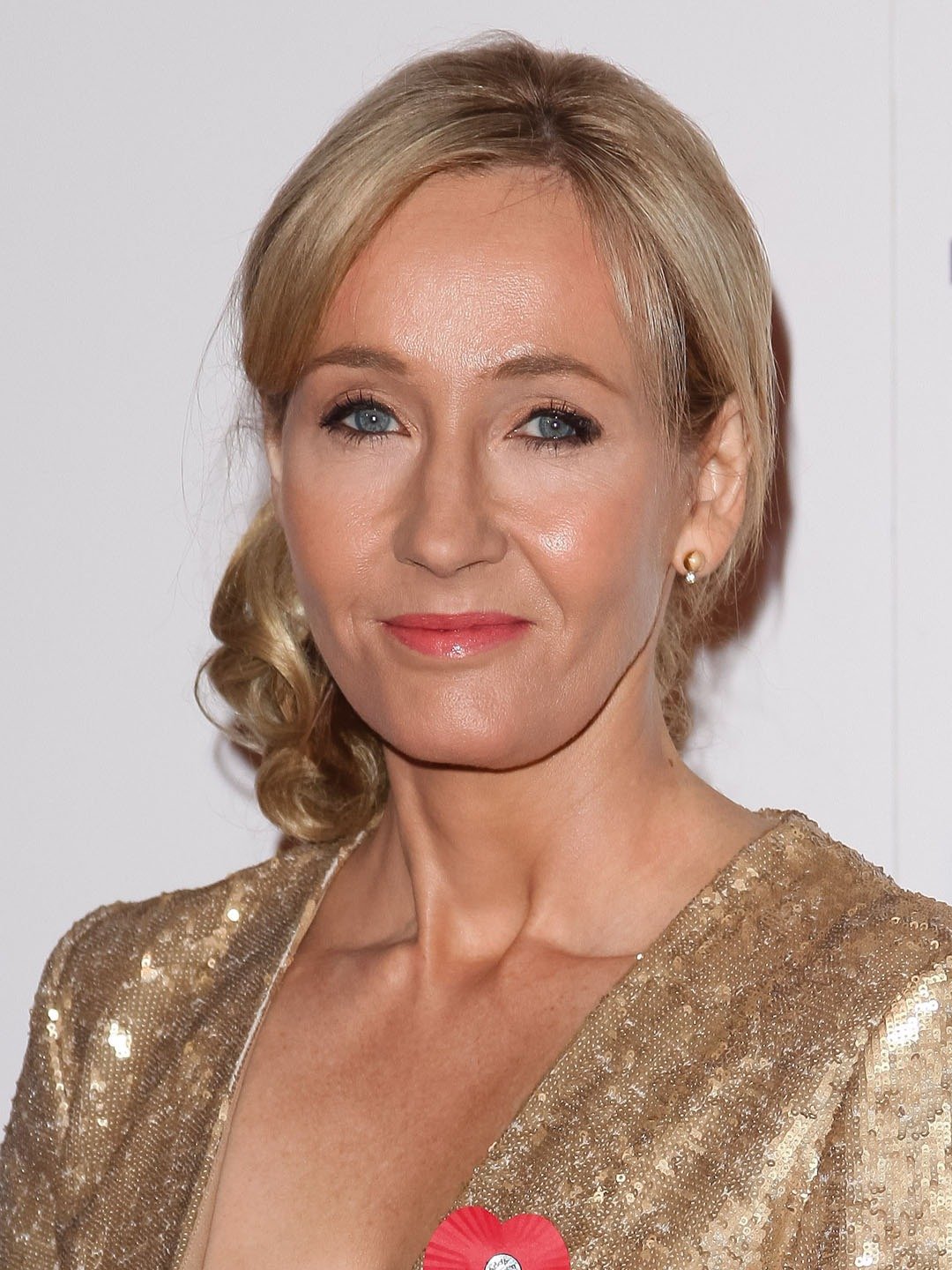
Role Research (Producing) JK Rowling Analysis

Image result for jk rowling
Another person who'm sprang to mind when trying to find "creative producers" to influence my role on this project was J.K Rowling. 

As writer of the Harry Potter series (amount other things) Rowling was a very creative person and astute business woman. Due to this when selling her material to the film industry she was not going to relinquish full control to them. And ended up coming on board the production team as a producer for the series, with a focus on overseeing the creative decisions made in the production process.

As such I feel she would be a great person to learn from.

Early on Rowling insisted on being present during all casting sessions. To make sure she found an actor that matched her vision for each of the characters. 

This influences my work by giving me the confidence and guidance to know that I need to be helping Alex pick and arrange contributors for our documentary, to ensure we get the most interesting people we can.

Later on during the pre-production phase Rowling was very astute when it came to the adaptation of the story. She insisted on having advanced copies of each script draft that she could read over and adapt as necessary. Thus ensuring that the finer details of the story were not overlooked and remained close to her humble vision.

I have already taken this on board and started to read each new script that Alex has been writing for our documentary, giving feedback as I feel necessary. 

During the main production phase, Rowling took a bit more of a back seat, sinceat times it becomes important for the producer to take a step back and allow the director and D.O.P to do there job properly without interference. None the less she still kept a close eye on all the filming and from what I have read, was never afraid to step up and voice her opinion if she felt something wasn't working. 

Noting when scenes did not work Rowling would combat the issue by providing story boards she's had drawn up to help illustrate the point she was making. Then working more closely with the director to ensure that the shooting of the scene changed accordingly. Although having little to do with the crew, she was able to give regular and detailed briefings with the cast of her films to ensure their portrayal of her characters was as accurate as it could be.

This is really interesting to learn. As a producer in this unit I note the importance of giving my team space, but also being prepared  to step up when the need arises to steer the creative direction of a scene if it needs external influence that Alex is unable to provide.

I also note the importance of detailed briefings and utilising the concise ability to explain and justify one's ideas. In this documentary I hope to be able to both brief and provide feedback to our contributors (Alex in particular) so that we get the most effective answers to our questions. As well as being able to "take the reigns" and become the voice of reason that influences certain decisions on set.

By looking at both these producers, I feel I have a greater understanding of my role that will better prepare me for being able to think on my feet and have the necessary creative influence etc. when we begin filming fully. 

Major Project: Research (Editior Role Analysis)

Major Project: Research (Editing tips from Drew Fortier)


Drew Fortier 2.jpg

In preperation for the role as editor I looked at the work of documentary editor Drew Fortier. And watched a behind the scenes interview with him, where he breaks down the responsabiliteis of an editor. Bellow is the transcript form that interview whcih i read carefully to prepare me for my role as editor on this project.

  • Receiving a brief, and maybe an outline of footage and/or a shot list, script, or screenplay
  • Assembling all raw footage, with camera shots either recorded or transferred onto video tape in preparation for inputting into the computer
  • Inputting uncut rushes and sound, and synchronising and storing them into files on the computer
  • Digitally cutting files to put together the sequence of the film and deciding what's usable
  • Creating a 'rough cut' (or assembly edit) of the programme/film and determining the exact cutting for the next and final stages
  • Reordering and fine-tuning the content to ensure the logical sequencing and smooth running of the film/video.

Additional tasks may include:
  • overseeing the quality and progress of audio and video engineering and editing
  • experimenting with styles and techniques including the design of graphic elements
  • writing voiceover/commentary
  • suggesting or selecting music.
Fortier goes on to explain in an article he rote, about what important values you should have as an editor> He explains that you want to ideally have a fast turn around to impress employers.

For my project this will mean cutting sequences together (even if they are rough) soon after they are filmed so we can get a sense of how they will work.

Fortier also explains that an editors role is often one of experimentation. Saying that it is important to test different ideas and techniques, getting a range of opinions to see what works best. For my work I think the best way to achieve that will be through the use of different editing styles, especially using different music to raise or lower emotions.

Fortier goes on to say that with his work on "Attack On Life", he found that it was important to regularly engage his director. Ensuring he had a more active relationship with the production crew and his director in particular, meant that communication could be clear, it was easy to understand the progress that had been mind and lead to a more open relationship that allowed creativity to flow.

I hope to have my director with me for a large portion of the edit so that I might regularly get his opinion on sequence and effective story telling techniques. 

An editor must have an understanding of narrate and story telling techniques. Able to construct a pathway even if the work is not linear. And most importantly an editor should be a problem solver. Taking on board information and context from each shoot so that if a problem arrises they either work towards fixing it or suggesting an alternative option. 

I hope to look further in to Fortier's work to help inform and inspire me as editor on this project.

Saturday, 2 February 2019

Major Project: Research-Learning To Grieve: George Shelley

Major Project: Research-Learning To Grieve: George Shelley

Continuing with my research into relevant and useful source material to use as inspiration to guide/inform our documentary. I felt it would be a good idea to look into another BBC Three documentary since the last one I researched seemed very close to the style we were after. This time I looked into the documentary "Learning To Grieve: George Shelly". Below you can read the notes of my findings after watching this short film. 

  • We get some background on the presenter right at the start of the documentary.
  • Nice use of establishing shots
  • Presenter visits their old home town and other sentimental places, in order to reflect.
  • Old photos used
  • Quiet but really effective background music.
  • The documentary uses cutaways in a unique way (most of it is B-Roll) so it adds to the story without distracting from what is being said.
  • Use of extreme close ups as reaction shots.
  • Shots of presenter fighting back tears (we then connect to them on an emotional level).
  • Subtle use of heartbeat sound, really effective touch.
  • We talk to contributors that really add something to the story; family, friends, nurses etc.
  • The handheld camera helps everything feel raw.
  • Interviews are mostly uncut so we hear the presenters true unedited thoughts.
  • As the narrative moves forward the presenter takes time to regularly reflect on what’s been happening and how their feeling.
  • It isn’t immediately clear why we are going to talk to certain contributors or even who they are (feels a little random at times).

  • We watch the presenter performing one of their “hobbies” as a method of working out their emotions but also distracting themselves from them.
  • Shots of presenter hugging, breaking down and looking into middle distance as they deal with their overwhelming emotions.
  • Text is used to make and explain/expand on certain points.
  • Two shots, reaction shots and reverse shots.
  • The presenter talks a lot about what’s happened and how they feel about it, but not so much what they’ve learned.
  • When the presenter is at a low point all other audio is cut. Our focus is on them and only them.
  • Great mix between PTC’s and voice over.
  • Some tangents e.g. the one about the presenter’s sexuality were nice to see but felt a little irrelevant to the core of the narrative.
  • Effective Depth Of Field in shots and possible use of colour grading for added effect, something I hadn't previously considered in my editing notes.


Closing Thoughts

  • A really effective documentary that connected us with the presenter on an emotional level much better than several of the others we have looked at.
  • We get a rich understanding of the presenter's background and life, through the places he visits, people he talks to, and stories he tells.
  • Overall narrative arc didn’t seem that clear. The documentary is about learning to grieve but it isn’t made overtly clear exactly what we’ve learned.
  • Similar storytelling techniques to what we’re after, but we’d have a clearer and more fleshed out narrative.

Overall Relevance Score 7/10

Major Project: Role Research (Editing Techniques)

Major Project: Role Research (Editing Techniques)

For my role as editor on this project I knew it was important to have a clear and consistent workflow, guided by informed decisions and processes. So I did some research into the key editing techniques and processes I would likely need/encounter on this project. 

L-Cuts
One of the biggest things I wish to incorporate into this project is the use of L-Cuts. In basic terms, an L-cut is where you hear the audio from a clip before you see the video (likely lingering on the clip before). I find this an effective way to transition between two scenes that I want to feel quite connected. L-cuts can be used to avoid cutting to black or having to make an awkward jump. 

But they can also be used to join parts of an interview together, this will be especially handy in our project when I need to condense sequences. I can use cutaways while i bring in the audio from a later point of an interview then cut to the visuals a few seconds later, thus hiding the cut.

This is a technique i've seen used fairly often in the source material I've been watching for research, and I hope to utilise it well in this project. 

Multiple Cuts
As an editor, it is important that you produce multiple cuts of a film before the final version. This way you can review the edit at different stages to establish early on what works and doesn't work. Although I hope to have my director with me for a lot of the edit, it will become useful for showing any updates made in his absense. As well as being an easy method to enable feedback from our tutors. I can send them the cut even if i'm not at the studios, then find out what changes they and my director would like to see.

A rough cut and a fine cut are the minimum you should produce but in all likleyness, I will be producing far more versions than that. To get the most feedback possible and have a chance to test out different shots/sequences, grades, effects etc.

Due to our schedule, the fine cut will likely occur quite late, but I'd like to have everything except our final sequence ready by the race day. This means that both the editor and the director have more time to focus on tidying up smaller key details and adding finishing touches, rather than spending all their time on the major storytelling aspects.

Rhythmic Editing 

One editing technique that might come in useful on this project is rhythmic editing. 

In simple terms, rhythmic editing means to cut your video to the beat and or structure of a song and or other audio. There are lots of advantages to this, it creates a more visually interesting sequence. It helps with the pacing and intensity of a scene allowing the editor to manipulate how an audience feels. It can help transition scenes or make something feel faster.

This is a technique I haven't done much with before but would hope to use in a couple of places within this project. Especially during montage sequences like a workout or racing segment. Some of the source material i've been watching has used rhythmic editing in places (but used it sparingly so it doesn't become the primary technique of the film).

If ic an get this to play with the natural atmospheric audio and music we will obtain in our filming then I think it will give a boost to the narrative in certain places.

Bins
As an editor organisation is key. Often TV has a quick turn around and the edit needs to get done fast. To make things as smooth as possible it is common practice to keep a tidy and easy to navigate workspace. Utilising bins and folders (with subfolders and possibly named shots). The use of "Bins" is to help keep your dock tidy and allow you to access the clips you need fast. This process involves organising your footage/clips in to different folders within your editing software so that they are kept in categories such as their content, usage etc. In this instance, I will divide the shots up in to different sequences and then other subfolders for specific parts of the sequences. Naming them as clearly as possible so i never have to hunt for anything too hard.

If possible, since I will be attending the shoot days I may try to take regular concise notes about which takes, shots etc. are most effective. This will save me from spending loads of time reviewing footage to find the best takes if i already know which ones I am going to use.

Colour Grading
One of the more finite parts of the editing process, is colour correcting/grading.

Towards the end of a film the editor should be looking closely at continuity, this is not simply limited to blocking and positioning of props, cast, lighting etc. But also to the overall look and colour tones of a sequence. 

In many of my previous works I have attempted color correcting. But here it will matter more than any time before since this project will be longer and spread accross more locations than anything i've previously filmed. 

Ideally, you would use cameras with a similar colour profile, but this isn't always possible so I will have to learn the natural tinting of our different cameras, and practice balancing them early on to avoid delays with the fine cut.

Then there is the grade. To make the film the best it can be, and help it stand out from other works, it is important to give your documentary an effective and individual colour grade. In basic terms, this is a bit like a filter that gets applied over the whole film, to bring out certain tones and give the film a more professional emotive feel.

Which is why it is important to familiarise yourself as an editor with the colour grading process. Making sure all the shots look the same and share similar tones even if shooting conditions have changed is important for giving an immersive film with a good flow of continuity.

While colour correcting can be done solo, the editor may be able to enhance the look of a film through grading and filters. In which case they should sit with the DOP and director to create a well-tinted sequence that enhances the overall look of the film. Before a session like this, I hope to come up with a basic idea of how I want the film to look, the colours I want to bring out and to what extent it should be applied. Giving me a head start in this process.

A grade can aslo be used to highlight certain emotions and denote certain themes within a film. I shall do a bit of colour research to find out what colours might work well.

I will look at other films for inspiration and to see what works, as well as look at the best techniques to use. This is something I will be doing towards the end of my edit.